

Entrenched somewhere between a pair of sine wave tones, Sachiko M achieves the ideal state of ambience
In this article I will attempt to define, however loosely, the purpose and goal of musical ambience, how it relates to the aforementioned ideal state of ambience – specifically how it relates to Sachiko M and the release Bar さちこ, which will be shortened simply to Bar for western paletteability and convenience.

We can define this ideal state of ambience in alternate terms as the hypothetical extremity of ambience – in simpler terms, the point at which all – typically – musical and external context is relinquished in order to allow the listener to inhabit essentially physical, functionally musical, space of mental and emotional projection. This space – which we’ll refer to as the ideal state of ambience – is the final destination of all those in the ambient musical lineage, something that can encapsulate everything from Musique Concrete to Onkyo.
Compositionally, Sachiko M utilises the sampler not for its original purpose of using and reusing recorded material for recontexualising music in different forms, but by instead generating sine wave tones – in doing so encompassing an almost revolutionary, minimalistic gambit throughout Bar.
Musical ambience, categorised vulgarly and coarsely under the all-too-misleading genre classification of Ambient Music – a seemingly subtle difference but teeming with implications – has in modern times been reduced to a specific set of tropes and routines due to its lineage in scoring films, art installations, and post-centralised internet relaxation playlists – offered at twelve hours a pop in a seemingly bottomless, squelching crevice of youtube recommended compilations. Perhaps the destiny of ambience was always one of innate disposability due to the peripheral nature of the ideal state of ambience, but its unique musical status has tainted ambience with horrific, if understated, connotations.
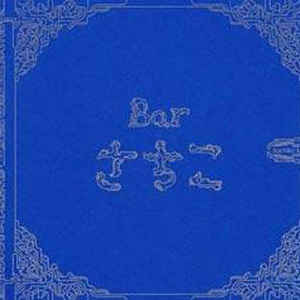
Ambience in music has been tied – perhaps irreparably – in the minds of both casual listeners and many astute ambient aficionados with notions of relaxability, of pleasant moods, of a style of music that is often needlessly contexualised, tearing itself away from this ideal state. Ambience is so often contextualised by cover art and track names, injecting the listener with details functionally irrelevant to the ideal state of ambience. Direct, deliberate evocations of mood, tone and emotion can be seen as the antithesis to ambience’s ideal state – the destruction of an ideal blank canvas for the listener to project onto. Ambience in music necessarily becomes a deeply personal environment for the listener to functionally inhabit for the duration of the piece. Such a deeply powerful, unbelievably resonant experience is now an occult practice in the most etymologically literal sense of the world.
Bar is as confrontational as it is ambitious. The quiet aggression portrayed by the near-unlistenable blasts of tinnitus-inducing sines eclipse much of the outwardly violent Harsh “Japanoise” of Sachiko M’s contemporaries. There are many records made for the explicit purpose of causing discomfort, it’s a well-trodden field. But beyond the ceaseless discharge of loud-rock self-aggrandisation with their pouted posturing of purported extremity, Sachiko M inadvertently that possesses genuinely aggressive intent – all without sacrificing the ideal state of ambience to the altar of direct emotional evocation.
What makes Bar so powerful is how subverts the casual interpretation of musical ambience and inadvertently achieves its own state of ideal ambience without concern for listenability, paletteability or good taste. It’s an insular release that acts as a truly transgressive piece of art, far removed from the lyrically vulgar, musically reserved works that are too often mislabelled as transgressive. What Sachiko M accomplishes is something that has been predictably racked with controversy – the cries of “non-music” from the melophobic have surrounded Bar since its release. What she accomplishes, however, is something done by only a few – the careful cultivation of a true sonic landscape, once that can be totally inhabited by the listener. A landscape encroached by thorns, undulating flesh and paradoxically lush desertification.
 HypIreStition Ruins
Leave a comment