
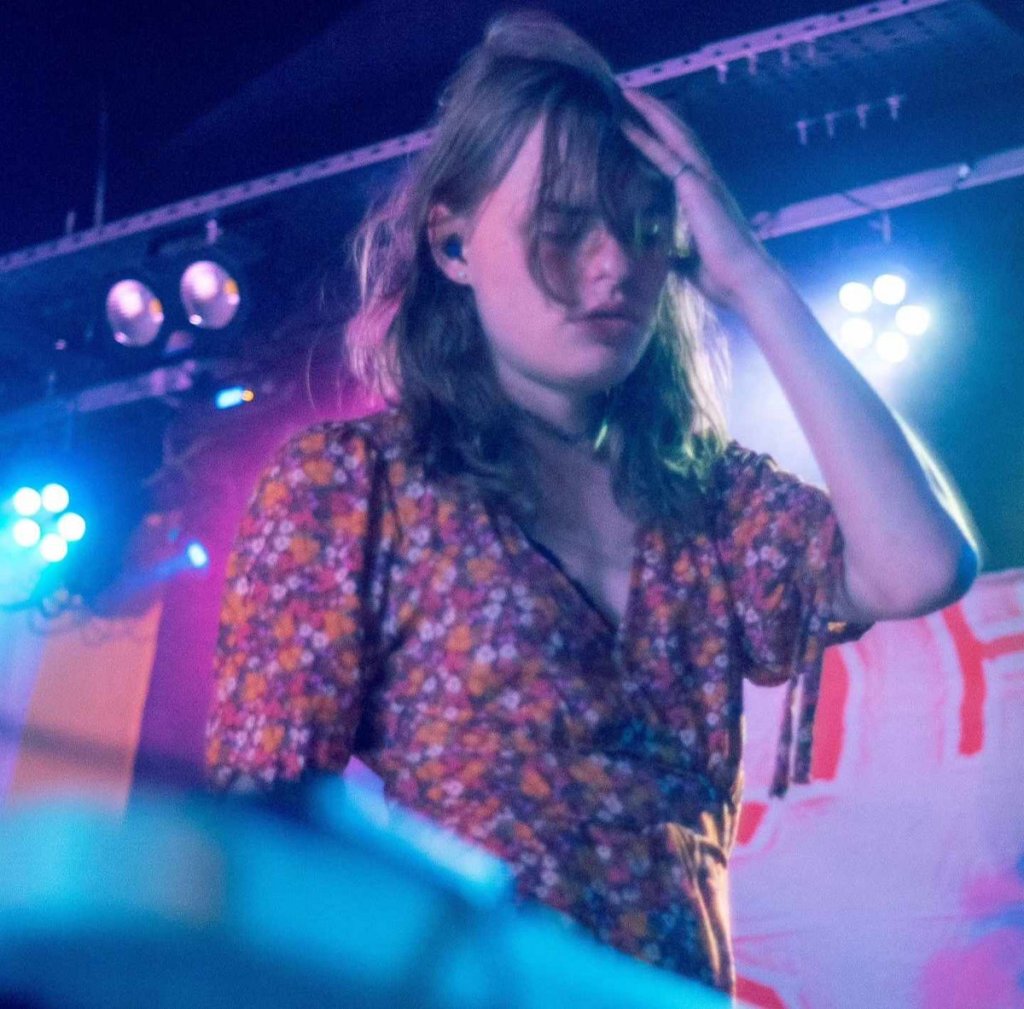
Alina Church of the south-coast noise project Distraxi was kind enough to chat to me about her music, the English noise scene, pain-as-hope, and more. You can get Distraxi’s music here, and donate to her GoFundMe here.
Your self titled Distraxi record from last year was one of the best records of the year and also felt like a culmination of everything the project had done so far. I hear a track like Precipice and it’s warbled synths remind me of early material like Castration Fantasy. It really feels like a significant record in your catalogue, what was the recording process like and what was the ideas behind it?
I’m glad you liked the release, it is very special to me. I definitely went into it with the mindset of condensing my sound into a coherent release. Hopefully that payed off. Its less coherent conceptually than my other releases, but I drew on conceptual elements from different parts of my catalogue.
Giving the album my project name made sense to me. Distraxi means violent alienation from oneself, and every track explores that in some way. The first track draws on philosophical pessimism and Schopenhauers theory that everything is driven by an all encompassing will, which constantly reaches out for more despite the subjects which it operates through. I explored pessimism all the way back in my first release “crocodile lobotomy”. Precipice and It Hurts So Much explore the intensity of love in a very negative way which is something i’ve done in my earlier recordings as well.
In terms of the recording process it was the culmination of a lot of experimenting. The tracks on there are the “best of the bunch” after a year and a bit of recording quite a lot- although Slow Crawl Through Time and It Hurts So Much were both one takes. Strange how sometimes a gem comes out of nowhere and other times it takes months to form a track!

You’ve described your records as working through the medium of “Ecstatic Pain Castration”. Could you explain what that means to you and how it influences your art?
I don’t intend my work to be cathartic. It’s exploring negativity in a way that feels incredibly important to me. I think negativity reaching a kind of ecstasy is how i’d describe it, and why I need to do it. Its sort of severing myself from pain with pain, hence castration. It’ horrible, there’s not much positivity there, but its redemptive, its hopeful. I hope it feels like this for people who listen to me as well. Pain as something redemptive is something I explore a lot. I did a track on my Everest Elysium tape called “Pain Before Death” about court eunuchs in imperial China who were castrated as an alternative to execution. The suffering which they experience is rooted in hope. It doesn’t make the choice they were given right, or positive, or healing, but there was hope in the pain suffered.
Doryphoros’ Bride came out early this month. I’m struck by how unique it is in your discography, the first two tracks sound like something hot bubbling underground threatening to come up. Could you tell me a little about the record and its recording?
This album actually came out of a pretty positive space, unlike all my other releases, so there was immediately a different feel for me when making it. Track 2 – Castration with Love draws comparison between freedmen in ancient Rome and the trans experience, freedmen not being seen as “real” citizens, but aside from that its a pretty positive album. I was falling in love throughout the recording process as well as recovering from a heartbreak, and also exploring my sexuality a lot more than I ever had done. It was a healing time for me and I wanted to express that through the music I was making.
I usually like doing more than one underlying theme in a release, so as well as these personal themes it also followed the romantic and sexual exploitations of Nero like I did in my album Sporus, but this time with Neros alleged husband, Doryphoros. This is a romantic relationship with darker undertones, contrasted in the album with positive, romantic undertones. I like contrast in my music, disparate themes linked together. Like the third track on there, which is probably an uncomfortable listen for most people, whereas for me its just a recording of me consenting to do something which I found very healing, and listening back on it just brings me back to those sensations in a very positive way.
Sonically its a lot more subtle than a lot of my other stuff – I rely less on feedback and blown out harsh noise and more on more subtly distorted analogue equipment and synth melodies. My friend Danny from Genderisthebastard and Victim Unit did the mastering, I can’t thank them enough, they really brought out the sound in the more bass driven way I wanted it to sound.
There’s a lot of noise music coming out of the UK right now that feels fresh and exciting as an outsider. Do you feel connected to what’s going on in the UK right now?
Yes, definitely. The UK noise scene has brought me a lot of joy in the last few years and I definitely feel connected to it which is amazing. Some of the first noise acts I got into were UK artists like Blackcloudsummoner, Cremation Lily, Knifedoutofexistence and Fleshlicker through the Outsider Art label. I still collect everything Outsider Art releases and its been hugely influential for me. There’s this amazing sense of community in the UK noise scene I think. I’m pretty withdrawn socially so one of the main times i’ll actually be hanging out with people is at gigs, and its been wonderful to befriend so many people who I was introduced to through their work.
As an extension to that, how do you find doing collaborative records? You’ve had records with Daniel Lundh, SecretWeapon, your work on the Mima Kass Six-Way Split series, etc. Is it more stressful working/collabing with others?
I don’t think I find it more stressful – perhaps even less to be honest. I can go into making something with the mindset of “how do I compliment this artists sound?” Its often driven me to change my sound doing splits, as i’m trying to compliment a specific sound rather than just do what I normally do, which has definitely driven my project forwards. For example my self titled took into account methods I used in the more ambient focused tracks in the pain electronics split I did on static ritual.
A lot of your music seems intimate and very personal, was it difficult transitioning that to live performance in front of others?
It felt natural. I just sort of jumped into doing shows and never looked back. The discomfort of emotional openness is a big part of the project. Pretty much every release i’ve done has been me putting my (primarily) negative emotions into sound with the hope that people can hear them, take them, make them their own in a way that relates to them. I like to think of it as oversharing as an artform… when someone shares a little too much for your liking and it makes you feel some form of discomfort, and you’re almost sort of imprisoned by their own experiences and forced to take them in. Doing this with music feels almost necessary for me (and hopefully stops me from oversharing quite as much as i’m liable to do this). Doing it in a live setting works even better. People can see what I’m trying to communicate as well as hear. I’m usually in emotional distress during shows and sometimes physically violent towards myself, and having all that viewed, as well as heard, in a creative medium rather than pointless misery feels very important to me- again, it turns negativity into something of value.
How much of your process is improvisation vs composition? Do you have a definitive idea of what a piece will be before you start or is it just pieced along as you write/perform?
I usually have an idea in my head of what I’m going to make, although it often changes as I start playing around with alternatives to how it could sound and land on something I think is better. I almost always have a pretty solid idea of the theme of a track I’m making as I start, so often that feeds into it and changes it in ways even I don’t expect.
What’s particularly striking about a lot of your records is how textured and dynamic they are, they have this sense of movement to them, like I can reach out and physically feel the mix. I’m curious what equipment do you typically use for your recordings?
I like to use a mixture of digital and analogue. Juxtaposing more down to earth, “dirty” sounds from analogue equipment with more spacey sounds from digital synths is something i’ve done since my early releases. I use fl studio for digital stuff (mainly because its what i’m used to) and a variety of pedals, and amp, contacts mics and a dynamic mic for analogue.
What attracted you to noise and extreme music to begin with?
I think the ability to convey very strong emotions in a way i’ve never heard before is what attracted me to noise. I then got into other extreme music I like such as grindcore and extreme metal through noise. Kind of the opposite way round to a lot of people I suppose!
What are your biggest non-musical influences right now?
Well this sounds edgy but mainly my own trauma, dysphoria and depression. Fun times!
Finally, what are your plans for 2024?
I’m releasing a new full length called “There is a warmth I crave and never get” on outsider art soon. I’m also going on tour with blackcloudsummoner and genderisthebastard in April, as well as Nudeconsumer, Yotzeret Sheydim and Cranial Key in May and Pale World and James Shearman in June! Apart from that i’m releasing a few limited tapes throughout the year.
 HypIreStition Ruins
Leave a comment