
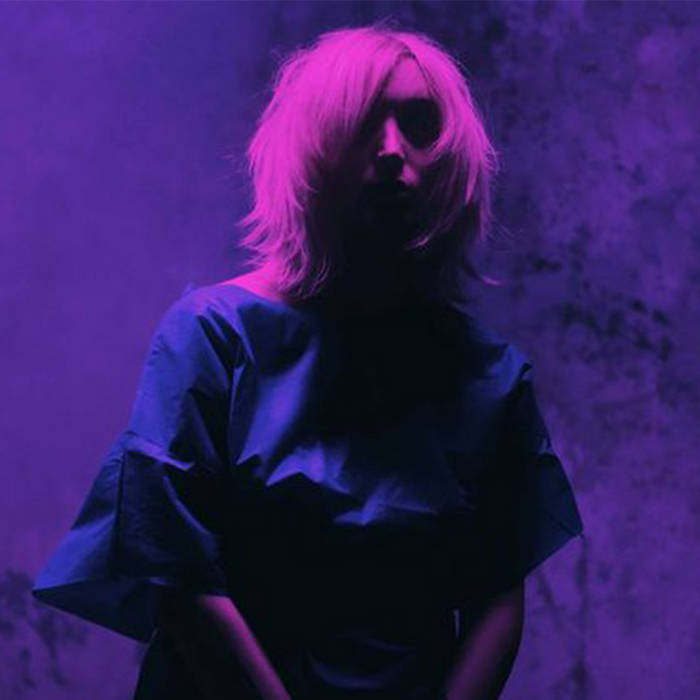
Many thanks to the immensely talented Xandra from Uboa for being kind enough to chat with me about her music.
How much of your studio material is improvised VS being consciously composed? Do you sketch out a loose outline, is it very methodical, etc?
Both/All of the above. Some things are structured, others are improvisations with polish added later, honed into compositions. Impossible Light was carefully composed with extreme detail. I don’t have a consistent method, and while I think it means things are diverse, it affects productivity so I don’t know I can recommend it. I just do whatever is needed at the time, picking a process based on what the circumstances call for.
Is it difficult to transition your studio material to a live setting? Your music to me is very intimate and dense, I’m curious if it’s difficult.
Extremely. I’ve never written songs with the intention of playing them live. The Origin certainly wasn’t and its never a factor when making music. I want to make the compositions to be the best they can be on the recording. Frankly, live is always an afterthought. Until recently it was all improvised and often used as a place to write new material as I’d have no motivation to do so at home, usually due to executive dysfunction issues. The new record will likely be even more difficult, due to its complexity, and usually what I have to do is perform a remixed version for it live. If people want to hear it exactly as it is on the record, they can listen to the record. I don’t really care about the idea of “pulling it off live” as some kind ’test’ for the skill of the musician. I don’t play math rock or anything. It’s only the composition and its emotional effect that matters.
I saw you mention before you used an old Zippy Zither on Origin Of My Depression, do you make it a point to use atypical instrumentation in your music?
It’s on Impossible Light and The Absolute too, as well as a few other places. A friend of mine found it in a house they’d moved into and gave it to me. I thought it sounded beautiful. I always wanted to work with zithers, kotos, harps, etc. ever since hearing the harp in Bjork’s “All Is Full of Love”, and Vangelis’s Blade Runner soundtrack. I have a similar love for gamelan too. I also like to vary things between synths, rock instruments and non-standard instruments to see what unusual combinations come out. However it’s often simply because I like the sound of the instrument, and I sometimes want the organic sound of something real and physical.
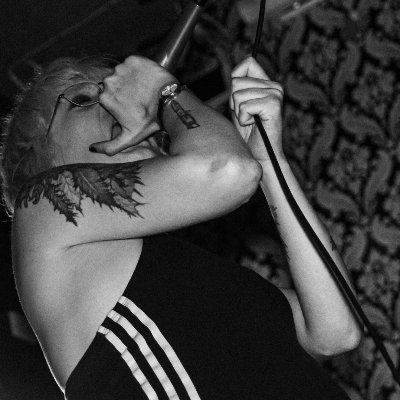
Were you surprised with how much attention your music has accrued in the past few years? I know friends of mine who have no connection at all to noise or harsh music who are familiar with your records.
It’s weird. I feel overrated. I am appreciative, as it’s become my job after being unemployed and dependent on disability most of my life. At the same time, being well known for the Origin is a curse too, as basically I am known for a record with a literal failed suicide attempt on the cover. Everybody now knows me for it, people I’ve never met now know about that, and often it leads to parasocial situations where people feel like they are close to me when I don’t know them. I am likely always going to be reminded of it. I am glad it has helped people process things however, and for that reason I think its important its still out there.
I hope something I do in the future eclipses it because I don’t want to be just known for negativity and depression. I was surprised it was that record as I don’t consider it my best – I preferred The Sky May Be and I personally am more proud of Impossible Light.
As with non-noise people listening to my music, it’s also because there are non-noise elements in it. I tried doing pure noise time and got bored. I couldn’t decide which genre I wanted to do, so I blended many together. I’d never heard clean singing with noise at the time, as well as noise mixed with a variety of genres so I thought the combination could be interesting. This likely made it more ‘accessible’ too, especially the singing.
Given how personal so much of your music is, is it difficult to be so open in your art? And does the harshness/enveloping aspects of noise make it easier to do so?
I never realised that being ‘open’ in this way was unusual. I think it’s my autistic tendency to overshare – not understanding what information is considered ‘appropriate’ for a conversation. I don’t want to just trauma dump forever. Some upcoming music has a fictional story not entirely based on my own experiences, so I can have a bit of an emotional distance from my music. Otherwise you burn out trauma dumping in public all the time.
How has your writing/recording process changed over the years? A record like Coma Wall is a world’s removed from even a record like Flesh Of The World.
I wouldn’t say it changed permanently – I will still always have bits of doom metal in what I do. Some upcoming stuff is very much returning to that. I switch things around out of boredom, writers-block or just following a new idea. The Flesh of the World was done in the early pandemic. I had just acquired some new synths and wanted to do something with them. That EP keeps being called darkwave – which I don’t really listen to much – but for me it’s basically post-metal or screamo without guitars. Something like Suffocate for Fuck Sake. However, it turned out ‘darkwave’, apparently.
Being autistic, I find a lot of catharsis in your music. You’ve spoken before about your art being informed by experiences with neurodivergence and ptsd – do you think noise and experimental music lends itself to an exploration/expression of that?
Noise is stimming. It also erases all sensory input other than itself. So are a lot of other genres – grindcore, breakcore etc. There’s always an overrepresentation of neurodivergent people in these scenes. It’s always cool to go to a gig and everybody there is as weird as I am. It’s also cathartic for all the trauma shit, and it’s also a dopamine hit for the ADHD’ers. Not every ND is into it ofc, it’s intentionally overstimulating unless i’m doing ambient or softer stuff. But I wouldn’t make the music I do without AuDHD. It’s neurodivergent to the core, even if I have been blessed with many neurotypicals digging it. I think it’s a great way of getting over the double-empathy problem that often comes out between neurotypes, especially allistic vs. autistic. It shows emotion more clearly and unambiguously than a facial expression, body language thing, social cue and seems to be a socially acceptable space to be honest. I remember seeing David Byrne talk somewhere about how he used music to communicate what he couldn’t in-person, I feel similar.
A lot of time art from neurodivergent people is discounted – made into a joke, relegated as outsider music – or made a point of trivia by neurotypical observers, especially online. I’ve known musicians who’ve been treated differently after making their diagnosis public, for example. Have you found that publications/commentators treat your art differently since speaking about neurodivergence?
I’ve not had condescension online really. The main difference is what you bring up – other neurodivergent people are often just excited somebody is even making music about it. Plus it’s very odd music, and odd brains tend to gravitate towards it naturally. Many of my fans and my musical colleagues are neurodivergent in various ways and I never feel out of place in many circumstances. At bigger events and with higher, more professional expectations placed upon me, I increasingly do find I have communicate to allisitics how we work differently. This includes doing shows, online promotion, etc. It’s also important to give context to them about *why* I am weird – explaining I am AuDHD seems to make that make sense to them. I only got diagnosed at 30 after a suicide attempt and finally had a neuropsychologist give me a 3-6 hour test for both autism and ADHD. Most of my mental health issues came down to a late diagnosis: bullying, social exclusion, violence, dropping out of university, countless misdiagnoses, medications based on these misdiagnoses that messed with my health in disabling ways, and ineffective psychologists. Nobody should go through that. If I’ve gotta be cringe and loud about it so it doesn’t happen to other people, its worth it.
As with tokenism, I am used to it over the trans stuff. I kinda just don’t care anymore. As long as I’m not treated like a toddler or serial killer or a Sheldon I’ve stopped caring. If I need to be a token to get awareness of this stuff out there, get my music heard and pay the bills, so be it. That way, nobody else has to and they’re free to sing about other things.
Plus, I tend to beat them to the jokes anyway. I literally do autistic screeching for a living and half my merch is uwu catgirl stuff. I am aware of the stereotypes and find it funny to reclaim them. Few things are as joyful to a minority as reclaiming a slur, or parodying the entire pathologising discourse that surrounds it.
How has the reception of your material been internationally VS at home? Have international crowds been more receptive?
Most people who listen to me, according to Spotify, are in the United States, then Europe. Australia doesn’t have many people in it and there isn’t much of a culture here for experimental music, especially when it’s heavy. There’s a strong anti-intellectual streak here, and my music doesn’t fit into Australian trends. It’s frustrating sometimes.
However, I have friends and a scene here who I love dearly. It may not be as many people, but it’s still a family.
Playing to like 1000 people (twice and then packing out the smaller room) at Roadburn was anxiety inducing. I didn’t really realise how many people dug my music until being up there. It was just theoretical and online before that. It’s bizarre to go to that from trestle table DIY house shows and pub gigs with friends. I generally prefer the smaller shows, mostly for stage fright reasons, although hopefully one day I can feel more comfortable on larger stages.
What’s it like collaborating with other artists? I’m thinking your recent work with Teeth Dreams, Mars Kumari, etc. Is it something that comes natural? I know I’ve spoken to some musicians who find it difficult to operate in that sort of democratic, collaborative environment.
I love to collaborate with my friends and musicians I admire. It’s a profound form of social bonding. I learn so much from who I work with and actively love the fact that I don’t have full creative control sometimes. It means that when I have writers-block or am too unwell to do stuff, I can give it to somebody else and it comes back fresh and new. Or if they give me something for me to contribute to, it challenges me to try something new. Or if I need to get something done and out, I do a split. Also, admittedly the performance-anxiety is lower when the responsibility for the quality of the music is diffused. I like to do compilations too. Especially for good causes (such as Noise for Artsakh) as it means I can do a tiny part in making the world more just, despite probably being too disabled to attend a protest or direct action. It also gives me space to try out new ideas, and make a song without the pressure of it being on a record. It reduces self-doubt and it can get me out of an unproductive rut.
It’s also a good way get an ADHD’er productive and out of executive dysfunction, as it is essentially body-doubling and somebody holding you accountable to finish something, and can take over when you are having a rough one. If any autistic or ADHD person out there is having trouble getting started – collaborate! It gets the momentum going and you’ll connect with people in fundamentally profound ways, indeed across the globe. It also brings me closer to my girlfriend – we are always working on things together and helping each other finish each others projects. Collaboration is a form of love.
What are you biggest influences right now, musical or non-musical?
Spaces – I always want to make music that captures the essence of a space. Like, musical psychogeography. I’ve always been easily fasciated by certain locales and driven to create soundtracks for them, ever since I was young.
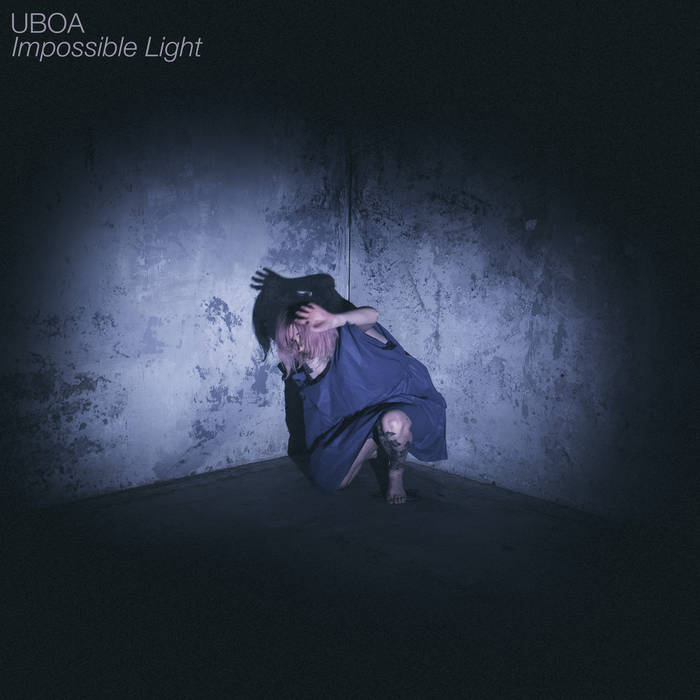
The Origin, The Apple of Every Eye and The Absolute were inspired by the decrepit queer sharehouse I lived in at the time – a whole bunch of traumatised people living in a cramped, falling apart house. I lived in a lounge room that had been converted into a bedroom and recorded in there, minus the parts which were field recordings from live shows. It was also inspired by frequent visits to hospital and wandering the streets of Brunswick in spring. The Sky May Be, Empathy Shield and Impossible Light were inspired by brutalist, 80s-00’s cyberpunk anime, hard science-fiction and post-apocalyptic spaces – concrete, cyberpunk skylines, polluted, trash-strewn shorelines, the vastness of space, abandoned factories, etc. However, they also have a meditative, spiritual component too – churches, temples, shrines and almost heavenly spaces. Hook Echo was inspired by tornado documentaries.
Every Uboa composition has had a space in mind. It’s what ties all the elements together – field recordings, instrumentation, production, etc. It’s also the motivation behind many of my covers, which are mostly photos sans a few exceptions (i.e. collages). It acts as an indication of where the record is happening.
Other than that, currently a lot of inspiration is coming from breakcore and atmospheric jungle.
What are you plans for the rest of 2024 and onwards?
Mostly rest. I’ll be an artist in residence at the University of Florida, teaching and composing over Zoom. I’ll play a show or two, and tour when I have hopefully regained more strength later. I’ll be recording too, finishing off many projects that I’ve neglected for years. I often like leaving something for a while and returning to it later, especially if I hit a creative wall with it. Some of the things I’ll be finishing have been quite a few years in the making. No plans for returning overseas yet – visa fees, disabilities and money are issues still being sorted out. I do hope one day I am healthy enough to see as much as the world as possible.
 HypIreStition Ruins
Leave a comment